
ARTICLE 1: SNORING AND SLEEP APNEA UNDERSTAND CORRECTLY TO PROTECT YOUR HEALTH
Snoring & Sleep Apnea – Understand It Right to Protect Your Health
Snoring, mouth breathing during sleep, or waking up in the middle of the night are often overlooked signs that may be linked to Obstructive Sleep Apnea (OSA).
This condition silently disrupts sleep, causing fatigue, poor concentration, and increases the risk of high blood pressure, stroke, heart attack, and other serious complications.
(Source: Kinh tế & Đô Thị, Hanoitimes)
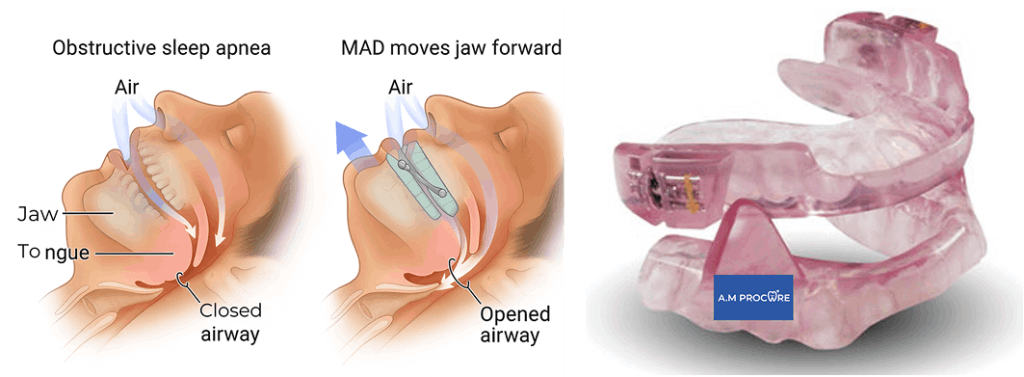
Oral Appliance Therapy for Snoring & Sleep Apnea
Global studies have shown that Mandibular Advancement Devices (MADs) are effective in managing mild to moderate snoring and OSA.
How it works:
The appliance gently moves the lower jaw and tongue forward, enlarging the airway space in the throat, thereby reducing soft tissue collapse – the main cause of snoring and obstructed breathing during sleep.
Benefits:
- Small, lightweight, and easy to use
- Helps patients breathe more easily, enjoy deeper sleep, and feel less sleepy during the day
- A convenient solution for those who are not comfortable with CPAP machines
Important Advice
Treating snoring and sleep apnea requires a personalized approach. Depending on the severity, your dentist may recommend lifestyle changes, orthodontics, myofunctional therapy, oral appliances, or surgery if necessary
To find out which solution suits you best, consult a qualified dental professional for sleep screening and a safe, effective treatment plan.
Take charge of your sleep and health today!
Hotline: 0968 046 488 – 0978 868 894
Website: nhakhoaamprocare.com
ARTICLE 2: Snoring – A Health Warning You Shouldn’t Ignore – Solutions for Both Children and Adults
Snoring isn’t just an inconvenience—it can be a sign of underlying health issues.
Studies have shown that loud snoring, especially when associated with sleep apnea, can lead to low blood oxygen, fatigue, poor focus during the day, high blood pressure, stroke, and heart problems.
⚠️ Importantly, home remedies or anti-snoring tricks should not replace medical evaluation. It’s essential to consult with a healthcare professional to identify the root cause and choose the right treatment, especially based on age and condition.
1. Snoring Treatment for Children
📍 Common Causes:
• Narrow palate or misaligned teeth blocking the airway
• Enlarged tonsils and adenoids
• Chronic mouth breathing
• Oral muscle dysfunction
📍 Recommended Solutions:
• Comprehensive evaluation of the teeth – jaw – nose – throat
• Orthodontic treatment to expand the upper jaw, increasing airway space
• Myofunctional Therapy – exercises to restore healthy tongue, lip, and throat function, helping the child breathe through the nose
• ENT referral in case of severe tonsil or adenoid hypertrophy
👉 Note: The best time for intervention is during growth periods, when jaw structure is more adaptable..
2. Snoring Treatment for Adults
📍 Common Causes:
• Overweight or obesity
• Thickened soft tissue in the throat, tongue falling back during sleep
• Retruded jaw or recessed chin
• Alcohol, smoking
📍 Approach:
• Lifestyle adjustments: lose weight, avoid alcohol before sleep
• Orthodontic treatment or bite correction when needed
• In cases of mild to moderate OSA, consider a Mandibular Advancement Device (MAD) – supported by multiple international studies
• Severe cases may require CPAP therapy or surgery
👉 Note: Treatment should be based on sleep study results, apnea index, and airway anatomy.
3. Expert Advice
Snoring and sleep apnea should never be ignored. Adults and parents of snoring children are strongly advised to consult with dental, ENT, or sleep medicine specialists for thorough evaluation and a customized treatment plan
📞 Take control of your sleep for a healthier life – every day!
Hotline: 0968 046 488 – 0978 868 894
Website: nhakhoaamprocare.com

🌙 A Comprehensive Approach to Managing Obstructive Sleep Apnea (OSA)
Obstructive Sleep Apnea (OSA) is not merely a respiratory disorder during sleep — it is a systemic disease that profoundly affects cardiovascular health, metabolism, brain function, and overall quality of life.
At the Scientific Symposium “Comprehensive Management of Obstructive Sleep Apnea” held at Hanoi Medical University Hospital (October 30, 2025), international experts shared updated evidence and treatment strategies. The key trend is clear: the shift “from monotherapy to multimodal care” — meaning OSA should be managed simultaneously across respiratory, metabolic, nutritional, and lifestyle dimensions.
⸻
🩺 1️⃣ Comprehensive care – more than just opening the airway
OSA is commonly associated with obesity, metabolic disorders, and cardiovascular disease.
Therefore, treatment should be multidisciplinary and holistic:
• Weight control: A 10–20% reduction in body weight can lower the apnea–hypopnea index (AHI) by up to 50%.
• Nutrition: Limit sugars, refined carbohydrates, and saturated fats; increase vegetables, fiber, and lean protein.
• Physical activity: Regular exercise improves upper airway muscle tone and reduces fat around the neck and pharynx.
⸻
💨 2️⃣ Airway-specific therapies
• CPAP (Continuous Positive Airway Pressure): remains the gold standard for moderate to severe OSA.
• Oral Appliance Therapy (OAM): effective for mild to moderate OSA or in patients intolerant to CPAP.
• Hypoglossal Nerve Stimulation (HNS): an emerging option for patients who do not respond to CPAP or OAM.
⸻
💊 3️⃣ Pharmacologic therapy – a new era begins
Recent studies presented at NEJM 2024 and Clinics 2024 highlight promising pharmacologic advances:
• Tirzepatide (Zepbound®) – a dual GLP-1/GIP agonist – has been FDA-approved as the first medication for OSA with obesity, showing significant weight loss and AHI reduction.
• Other agents such as Sulthiame or Atomoxetine + Aroxybutynin demonstrated approximately 50% reduction in AHI, but limited clinical benefits and notable side effects, remaining in experimental stages.
⸻
❤️ 4️⃣ Treating OSA means treating the whole body
“Treating OSA is not only about reopening the airway — it’s about restoring metabolism, sleep, and life balance.”
— Dr. Vu Thuy Tien, PhD, DDS
OSA should be recognized as a multisystem disorder requiring:
• Weight loss and lifestyle modification.
• Management of comorbidities (hypertension, diabetes, depression…).
• Improvement of sleep quality, reduction of daytime sleepiness, and restoration of overall vitality.