
1. Definition: What is Braces Orthodontics?
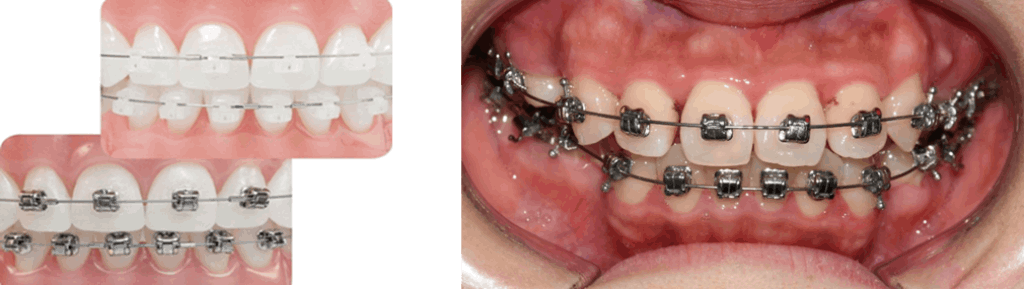
– Braces orthodontics is a treatment method that uses a fixed appliance system of brackets and archwires attached to the teeth to apply gentle, continuous force. This gradually moves teeth into desired positions, correcting bite issues and improving facial aesthetics and oral function.
– Advantages:
• High effectiveness and long-term stability
• Can treat severe crowding, impacted teeth, skeletal discrepancies
• Precise force control
• Reasonable cost
• Variety of bracket types (metal, ceramic, self-ligating, etc).
2. Treatment Process
1. Initial Consultation & Examination
• Assess teeth misalignment, bite issues, facial structure, jaw growth
• Discuss treatment plan, timeline, cost, and necessary commitments
2. Diagnostic Records Collection
• X-rays (Panoramic and Cephalometric)
• Intraoral and extraoral photographs
• Dental impressions or 3D intraoral scans
3. Detailed Treatment Planning
• Analyze X-rays, bite models, and occlusion
• Determine if extractions, palatal expansion, or mini-screws (TADs) are needed
• Develop a personalized treatment protocol
4. Brackets Placement
• Clean enamel surfaces
• Bond brackets individually to each tooth using special adhesives
• Insert archwire and secure with elastic ligatures or self-ligating clips
5. Periodic Adjustments
• Follow the orthodontist’s appointment schedule
• Return immediately in case of issues (broken brackets, poking wires…)
6. Treatment Completion & Retention
• Once teeth reach ideal alignment → remove brackets
• Place retainers (clear aligners or fixed retainers)
• Monitor bite stability and relapse prevention
3. Oral Care & Maintenance During Braces
1. Dietary Tips
• Eat soft foods
• Avoid sticky, chewy, or hard items (gum, chicken feet, sugarcane, etc.)
• Don’t bite directly with front teeth – cut food into smaller pieces
2. Oral Hygiene
• Brush after every meal using orthodontic toothbrush
• Use interdental brushes and water flossers to clean around brackets and between teeth
• Follow dentist’s hygiene instructions strictly
3. Regular Follow-ups
• Attend appointments on time
• Do not self-adjust any appliances – contact your orthodontist immediately if any issue occurs
Nội dung bài mới
1. Definition: What is Braces Orthodontics?
– Braces orthodontics is a treatment method that uses a fixed appliance system of brackets and archwires attached to the teeth to apply gentle, continuous force. This gradually moves teeth into desired positions, correcting bite issues and improving facial aesthetics and oral function.
– Advantages:
• High effectiveness and long-term stability
• Can treat severe crowding, impacted teeth, skeletal discrepancies
• Precise force control
• Reasonable cost
• Variety of bracket types (metal, ceramic, self-ligating, etc).
2. Treatment Process
1. Initial Consultation & Examination
• Assess teeth misalignment, bite issues, facial structure, jaw growth
• Discuss treatment plan, timeline, cost, and necessary commitments
2. Diagnostic Records Collection
• X-rays (Panoramic and Cephalometric)
• Intraoral and extraoral photographs
• Dental impressions or 3D intraoral scans
3. Detailed Treatment Planning
• Analyze X-rays, bite models, and occlusion
• Determine if extractions, palatal expansion, or mini-screws (TADs) are needed
• Develop a personalized treatment protocol
4. Brackets Placement
• Clean enamel surfaces
• Bond brackets individually to each tooth using special adhesives
• Insert archwire and secure with elastic ligatures or self-ligating clips
5. Periodic Adjustments
• Follow the orthodontist’s appointment schedule
• Return immediately in case of issues (broken brackets, poking wires…)
6. Treatment Completion & Retention
• Once teeth reach ideal alignment → remove brackets
• Place retainers (clear aligners or fixed retainers)
• Monitor bite stability and relapse prevention
3. Oral Care & Maintenance During Braces
1. Dietary Tips
• Eat soft foods
• Avoid sticky, chewy, or hard items (gum, chicken feet, sugarcane, etc.)
• Don’t bite directly with front teeth – cut food into smaller pieces
2. Oral Hygiene
• Brush after every meal using orthodontic toothbrush
• Use interdental brushes and water flossers to clean around brackets and between teeth
• Follow dentist’s hygiene instructions strictly
3. Regular Follow-ups
• Attend appointments on time
• Do not self-adjust any appliances – contact your orthodontist immediately if any issue occurs