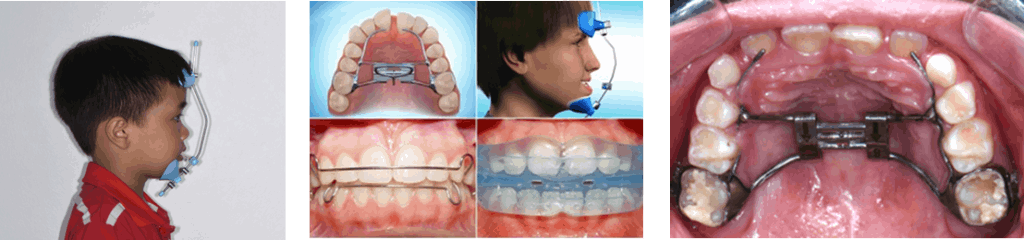
1. Definition: What is Interceptive Orthodontics?
Interceptive orthodontics refers to early orthodontic intervention performed during a child’s growth phase—typically between ages 6 to 12—to correct developing skeletal and dental abnormalities. The goal is to guide normal jaw and bite development, reduce the severity or duration of future comprehensive orthodontic treatment.
Advantages:
– Guides proper jaw development
– Corrects harmful oral habits early (thumb sucking, tongue thrusting, mouth breathing…)
– Creates space for permanent teeth to erupt correctly
2. Treatment Process
- Initial Examination and Consultation
– Evaluate child’s facial growth, bite, and oral habits
– Interview parents about medical history and treatment expectations
– Explain treatment goals, duration, and benefits - Clinical and Diagnostic Records
– Take intraoral and extraoral photographs
– Take dental impressions or perform 3D oral scan
– Take X-rays (panoramic or cephalometric as needed) - Treatment Planning
– Analyze X-rays and dental models
– Identify skeletal and dental issues
– Choose appropriate orthodontic appliance (removable or fixed) - Appliance Fabrication
– Send impressions and specifications to dental lab
– Custom-make orthodontic appliance based on treatment plan - Try-in & Adjustment
– Fit appliance on the child
– Check for comfort, tightness, and effectiveness - Delivery & Instructions
– Instruct the patient and parents on how to wear, remove and clean the appliance- Instruct on daily wear duration- Instruct on daily wear duration
3. Care & Maintenance After Wearing the Appliance
- Oral Hygiene:
- Brush thoroughly at least twice daily
- Clean the appliance daily (morning and night) using water—not hot water (which can deform it)
- Use a water flosser for optimal cleaning if possible
- Wearing Compliance:
- Wear the appliance for the prescribed duration and as directed by the orthodontist
- Dietary Recommendations:
- Avoid sticky, hard, or chewy foods
- Limit sweets and sugary drinks
- Follow-up Visits:
- Return for periodic checkups as scheduled by the orthodontist